
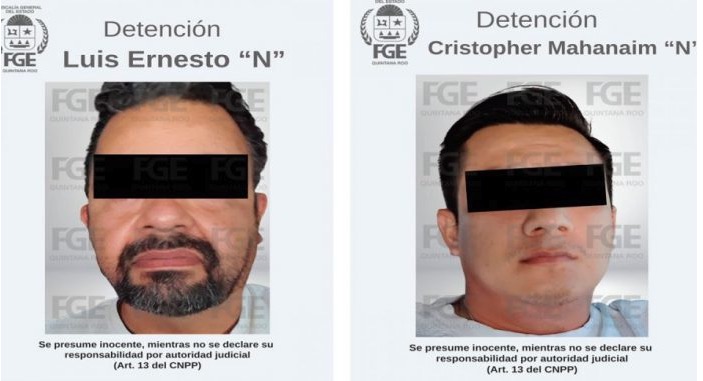
Two men are now in custody in Cancún for real estate fraud that cost 22 victims more than 12 million pesos. The Quintana Roo State Attorney General’s Office issued arrest warrants against Luis Ernesto “N” and Christopher Mahanaim “N.”
Both suspects face 22 open investigative files for fraud and illicit enrichment. Their method was straightforward — and it worked because buyers had no independent verification in place before they signed anything.
How the Cancún Real Estate Fraud Worked
The suspects acted as intermediaries. They arranged meetings with buyers interested in purchasing homes across Cancún. The suspects assured victims that properties were available and ready for sale. However, buyers never gained access to any of the homes they were shown.
The suspects used notary offices to create the appearance of legitimacy. In the first stage, buyers signed contracts that developers described as real estate mediation and legal service agreements. Suspects then brought victims to a second notary’s office. There, buyers signed additional contracts related to disputed property rights. A notary public and a legal representative of what appeared to be a real estate company attended both signings.
Suspects told victims the company would legally transfer ownership within six months. They also promised to complete all registrations with the Public Property Registry. No transfer ever happened. No registration was ever filed.
How the Scheme Unraveled
The fraud came to light when victims attempted to confirm ownership through the Public Property Registry. Officials informed them that no registration existed under their names. Furthermore, entirely different owners held legal registration on the properties these buyers believed they had purchased.
Total losses exceeded 12 million pesos across 22 victims. Consequently, every buyer who signed at a notary’s office and believed the transaction was complete discovered they owned nothing at all.
This outcome is not unique to Cancún. Across Quintana Roo, authorities have documented a consistent pattern of buyers signing documents that appear legitimate, transferring funds based on those documents, and discovering weeks or months later that the transaction never produced legal ownership. The Public Property Registry is the only authoritative record of ownership in Mexico — and most buyers never think to check it before signing.
Why Cancún Real Estate Fraud Keeps Happening
This case illustrates something buyers frequently misunderstand. A transaction can appear completely legitimate — notary offices, legal representatives, signed documents — while the fundamental elements of ownership remain entirely unresolved. Understanding what the notario actually verifies — and what falls entirely outside that role — is essential before any buyer signs anything in Mexico.
The deeper issue is structural. Mexico’s real estate market has no centralized MLS, no mandatory seller disclosure requirements, and no licensing requirements for agents or intermediaries. Anyone can represent a property, collect a deposit, and present documents that look official. Moreover, many contracts never actually transfer ownership — and buyers rarely recognize the difference until it’s too late. Verbal assurances and professional-looking paperwork never replace verified facts.
In Mexico’s real estate market, developers and intermediaries market properties through multiple channels. Buyers rarely verify documentation independently before signing. Additionally, the legal standard governing what buyers accept at closing — Ad Corpus — means that once a transaction closes, whatever was missed belongs to the buyer.
What Independent Verification Looks Like
Before committing funds or signing anything, buyers should independently confirm the legal owner of record through the Public Property Registry, cadastral records, and property tax history, whether the property actually exists as described, the status of permits and construction, and whether the person presenting the property actually holds legal authority to sell.
Additionally, buyers must understand exactly what type of contract they are signing. Mediation agreements, service contracts, and assignment agreements misled buyers in this case into believing they had signed actual purchase contracts. An independent review of any contract before signing is the only way to confirm what it actually transfers. In Quintana Roo, buyers can also cross-reference any development against the state’s public registry of irregular projects before committing any funds.
A Final Note
The arrests in this case serve as a reminder that surface sophistication is not the same as legitimacy beneath it. Two notary offices. Legal representatives. Signed documents. None of it delivered a legal transfer of ownership.
The time spent verifying a property before signing or paying is never wasted. In this market, that verification doesn’t happen automatically — someone has to request it, it has to be independent, and it has to happen before any money moves.
Independent verification before signing is not a luxury reserved for large transactions. It is the minimum standard of protection available to any buyer in this market. Every buyer in this market deserves that minimum standard of protection. The 22 victims in this case were not careless — they followed a process that looked correct at every step. What was missing was a single independent check of the Public Property Registry before any money moved. That check costs a fraction of what was lost.
In Mexico, that responsibility belongs entirely to the buyer. Buyers who understand that going in are in a fundamentally different position than those who find out after the fact.
Source: PorEsto, Quintana Roo — September 15, 2025. Original reporting in Spanish.