
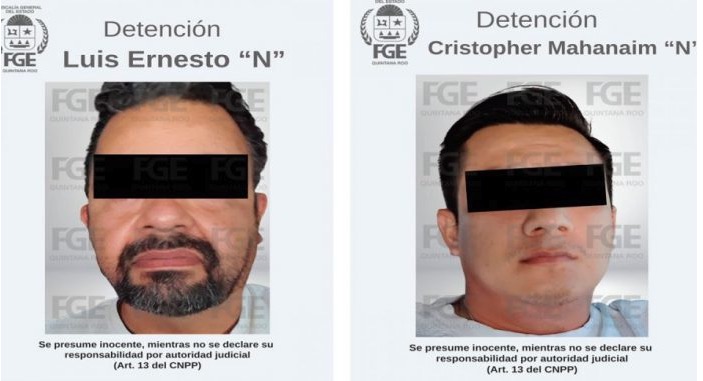
Two men are now in custody in Cancún for real estate fraud that cost 22 victims more than 12 million pesos.
The Quintana Roo State Attorney General’s Office issued arrest warrants against Luis Ernesto “N” and Christopher Mahanaim “N.” Both suspects face 22 open investigative files for fraud and illicit enrichment.
How the Cancún Real Estate Fraud Worked
The suspects acted as intermediaries. They arranged meetings with buyers interested in purchasing homes across Cancún. Victims received assurances that properties were available and ready for sale. However, buyers never gained access to any of the homes they were shown.
The suspects used notary offices to create the appearance of legitimacy. In the first stage, buyers signed contracts described as real estate mediation and legal service agreements. Suspects then brought victims to a second notary’s office. There, buyers signed additional contracts related to disputed property rights. A notary public and a legal representative of what appeared to be a real estate company were both present.
Suspects told victims the company would legally transfer ownership within six months. They also promised to complete all registrations with the Public Property Registry.
How the Scheme Unraveled
The fraud came to light when victims attempted to confirm ownership through the Public Property Registry. Officials informed them that no registration existed under their names. Furthermore, the properties they believed they had purchased were registered under entirely different owners.
Total losses exceeded 12 million pesos across 22 victims.
Why Cancún Real Estate Fraud Keeps Happening
This case illustrates something buyers frequently misunderstand. A transaction can appear completely legitimate — notary offices, legal representatives, signed documents — while the fundamental elements of ownership remain entirely unresolved.
In Mexico’s real estate market, developers and intermediaries market properties through multiple channels. Documentation does not always receive independent verification before buyers sign. Moreover, contracts take many forms — and some do not actually transfer ownership at all. Verbal assurances and professional-looking paperwork are not substitutes for verified facts.
What Independent Verification Looks Like
Before committing funds or signing anything, buyers should confirm the following:
- The legal owner of record through the Public Property Registry
- Cadastral records and property tax history
- Whether the property actually exists as described
- The status of permits, construction, and infrastructure
- Whether the person presenting the property holds legal authority to sell or represent it
Additionally, buyers must understand exactly what type of contract they are signing. Mediation agreements, service contracts, and assignment agreements can be — and in this case were — mistaken for actual purchase contracts.
A Final Note
The arrests in this case serve as a reminder that sophistication on the surface is not the same as legitimacy beneath it. The time spent verifying a property before signing or paying can make the difference between a secure investment and a costly mistake.
In Mexico, that responsibility belongs entirely to the buyer.
Source: PorEsto, Quintana Roo — September 15, 2025. Original reporting in Spanish.