
Tulum Illegal Developments — What the Government Found
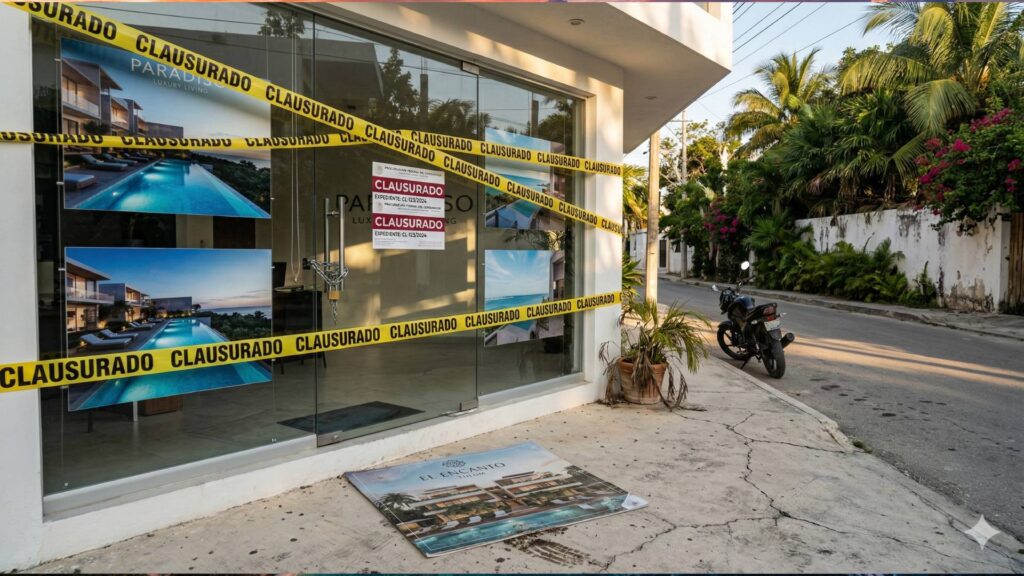
In September 2025, the Quintana Roo state government publicly identified 26 illegal Tulum developments that were actively selling properties to buyers without legal permits. None of these projects held the legal permits, certifications, or urban development authorizations required under Mexican law.
SEDETUS — the Secretariat of Sustainable Urban Territorial Development — issued the announcement in coordination with the Tulum City Council. The flagged projects included developments marketed specifically to attract international buyers. Names like Luna Sanctuary, Maia Holistic Community, Bosque Tulum, and Nova Tulum appeared on the list. Behind the branding, however, government officials found no legal ground to stand on.
What the Government Actually Said About Tulum Illegal Developments
The warning was direct. Authorities advised the public not to engage in any real estate transactions involving these developments. Purchases, rentals, and promises to buy were all prohibited.
The reason was straightforward. These projects operated without permits. As a result, no developer could guarantee that a buyer would ever receive a legal title to the property. The government made that consequence explicit.
This was not a case of minor paperwork delays. In fact, these developments actively marketed properties and collected money from buyers — many of them international — without completing the most basic legal requirements.
What Happened Next
Within days, 14 of the 26 developments produced documentation, and authorities cleared them from the list. The remaining 12, however, stayed on the warning list. No timeline was given for resolution, and no authority confirmed whether buyers who had already transacted with those 12 projects would receive any form of remedy or compensation.
That outcome raises a larger question. How many buyers had already signed contracts and transferred funds before the government issued its warning? The answer is unknown. Furthermore, no registry tracks buyers at the pre-sale stage. No public database shows which contracts exist or which deposits have been paid.
Consequently, buyers who signed before the warning had no way of knowing their development would appear on a government-flagged list days later.
Why This Keeps Happening in Tulum
Tulum’s illegal development keeps appearing because Mexico’s real estate market does not operate like markets in the United States, Canada, or Europe. Buyers cannot search a public permit registry from a laptop in Dallas or Toronto. Additionally, sellers face no licensing requirement. Anyone can represent a property and collect money from a buyer. No license is required, no background check exists, and no professional body has the authority to remove them from the market if a transaction goes wrong.
As a result, verification falls entirely on the buyer. Most buyers, however, do not know that until it is too late — and in a market with no MLS, no public permit registry accessible to foreigners, and no licensing requirement for the people selling the property, there is no system designed to tell them otherwise.
Developers in the Tulum market are developing properties at every stage — from raw land to pre-construction to partially built. At each stage, the project’s legal status can differ dramatically from what sales materials suggest. A permit pending is not the same as a permit issued. Moreover, a project registered with one agency may still lack authorizations from three others.
International buyers typically rely on the developer’s sales team, a recommended attorney, or a referred agent for due diligence. Nevertheless, all three of those sources share a financial interest in closing the transaction.
What Independent Verification Would Have Shown
A professional due diligence review conducted before signing would have identified the permit status of any of these 26 developments. It would have confirmed whether the project held legal standing with SEDETUS, the municipality, and relevant environmental authorities. Furthermore, it would have given the buyer the information needed to make an informed decision — or walk away entirely. What that review covers — and why it goes well beyond a standard inspection — is explained in detail in Why a Home Inspection Isn’t Enough in This Market.
That kind of review does not rely on the developer’s word. It does not rely on the agent’s opinion. Instead, it pulls records directly from the agencies that issue the authorizations and cross-references what the marketing materials claim against what the government actually shows.
A Final Note
The Quintana Roo government issued a public warning about illegal developments in Tulum. Fourteen developers responded and resolved their status. Twelve did not.
Buyers who acted on verified information before signing were protected. By contrast, buyers who relied on sales materials and notary appointments were not. The same enforcement pattern — 118 flagged developments statewide — is documented in Quintana Roo’s growing irregular development registry.
In Mexico, the burden of verification belongs to the buyer. Therefore, independent due diligence is not a luxury — it is the only mechanism that puts verified facts in a buyer’s hands before money changes hands.
Source: SEDETUS, Official Communication, Government of Quintana Roo — September 2025. Additional reporting by The Cancun Sun and Tulum Times.